

GOOGLE ADVERTISING
Google Advertising That Delivers Leads Fast
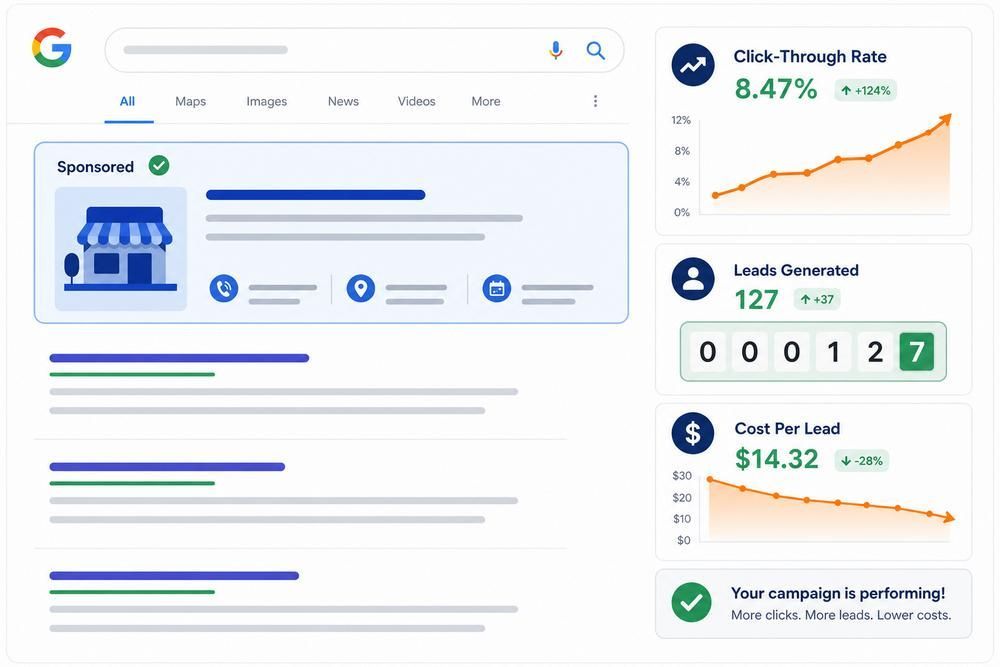
SEO is the long game. Google Ads is the fast lane. If your business needs leads now — or you want to dominate search results while your organic rankings build — a well-managed Google Ads campaign can put you in front of the right customers at the exact moment they're searching for what you offer.
The keyword there is 'well-managed.' Google Ads can be an incredibly efficient use of your marketing budget — or an expensive exercise in wasted clicks. The difference comes down to strategy, targeting, and the willingness to optimize relentlessly based on real data. That's exactly what PMI does.
We manage Google Ads campaigns for small businesses across Berks County and the Lehigh Valley from our offices in Reading and Allentown. Our clients don't just get more clicks — they get more qualified leads at a lower cost per acquisition, month over month.
The hands-on, data-driven approach we apply to every campaign isn't accidental. It's how PMI's founder has worked since the late 1990s — first in custom manufacturing-systems work, then leading marketing for a global apparel brand where the discipline of measuring what each marketing dollar produced was non-negotiable. The same instinct now governs how we manage your Google Ads budget.
Rated 4.9 across dozens of Google reviews
HOW GOOGLE ADS WORKS
How Google Advertising Works
When someone searches on Google, two types of results appear: organic listings earned through SEO, and paid ads that businesses bid on. Google Ads (formerly Google AdWords) is the platform that manages those paid placements.
You pay only when someone clicks your ad — which is why it's called pay-per-click (PPC) advertising. But here's the catch: if the wrong people are clicking, or the page they land on doesn't convert, you're paying for traffic that never becomes revenue. The goal of professional Google Ads management is to minimize wasted spend and maximize the number of clicks that turn into real leads and real customers.
Google's ad auction is more nuanced than most business owners realize. You are not simply bidding against competitors for ad positions — you are also competing on Quality Score, a Google metric that evaluates the relevance of your ad to the search query and the quality of the landing page. Higher Quality Scores earn better positions at lower costs. A tightly written ad pointing to a dedicated landing page can cost half as much per click as a poorly structured ad pointing to a homepage — for the same position.
This is why Google Ads management is a genuine discipline, not a setup task. The difference between a well-optimized campaign and a poorly structured one can be a 2x to 3x difference in cost per lead for the same budget. PMI clients consistently see cost per acquisition decline after the first 90 days as optimization compounds.
THE PMI APPROACH
The PMI Approach to Google Advertising
There is no shortage of agencies that will set up a Google Ads account and let it run. We're not one of them. PMI takes an active, analytical approach to every campaign we manage — because 'set it and forget it' isn't a strategy, it's a way to lose money slowly.
Competitor analysis before launch: Before your first ad runs, we analyze what your competitors are bidding on, what their ads say, and where their landing pages fall short. This intelligence shapes your entire campaign strategy.
Precision keyword targeting: We build tightly organized ad groups around specific, high-intent keywords. Broader match types mean more impressions but more waste. We use data to find the targeting that converts.
Ad copy that earns the click: Your ad is competing against multiple other ads for the same search. We write ad copy that stands out, speaks directly to the searcher's intent, and sets up the landing page to close the deal.
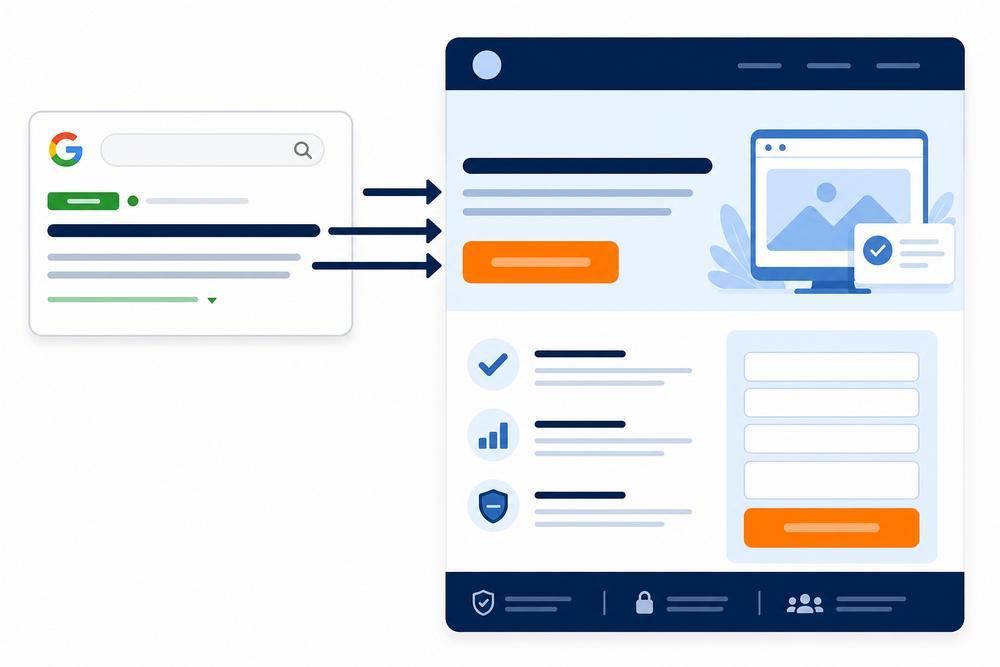
Landing pages built to convert: An ad that sends traffic to your homepage is an ad that wastes money.
We build or optimize dedicated landing pages for every campaign — pages designed to do one thing: convert the visitor into a lead.
Continuous optimization: Every other week, we review performance data. Which keywords are converting? Which ads are underperforming? Which audiences are responding? We adjust based on evidence, not intuition.
Monthly reporting: You receive a clear summary of your campaign's performance every month — impressions, clicks, conversions, cost per lead, and what we did to improve each metric. No jargon, no spin.
One operational detail behind these results matters more than it sounds. Your PMI Google Ads campaign is managed directly by Alan Robezzoli — PMI's founder and the person who personally owns every client relationship. There is no account manager between you and the strategist. There is no handoff from the salesperson who promised performance to the junior media buyer who actually clicks the buttons. The person who builds your campaign, optimizes it biweekly, and reports your results is the same person whose name is on the agency. That structural directness is the reason PMI's campaigns get the kind of attention most agencies cannot afford to give a small-business budget — and it's the reason cost per acquisition keeps moving in the right direction.
What Poorly Managed Google Ads Actually Costs
Many small businesses have tried Google Ads and concluded it doesn't work. In most of those cases, the campaign wasn't managed — it was set up and left. Google's automated recommendations are optimized for Google's revenue, not your ROI. Without active management, budgets expand, match types broaden, and spend gradually shifts toward traffic that looks like your audience but doesn't convert like them.
The most common problems in unmanaged campaigns: broad match keywords that trigger on irrelevant searches, no negative keyword lists to filter out obvious non-buyers, a single ad group covering too many search intents, ads pointing to homepages instead of conversion-specific landing pages, and no conversion tracking to measure which clicks actually produce results.
When PMI audits an existing Google Ads account, we typically identify 30–50% of spend going to clicks that have no realistic path to conversion. That's budget that can be redirected to the campaigns that are actually working. A properly structured account doesn't just produce more leads — it produces them at a fraction of the previous cost per lead.
CAMPAIGN TYPES
Google Ad Campaign Types PMI Manages

Search Campaigns
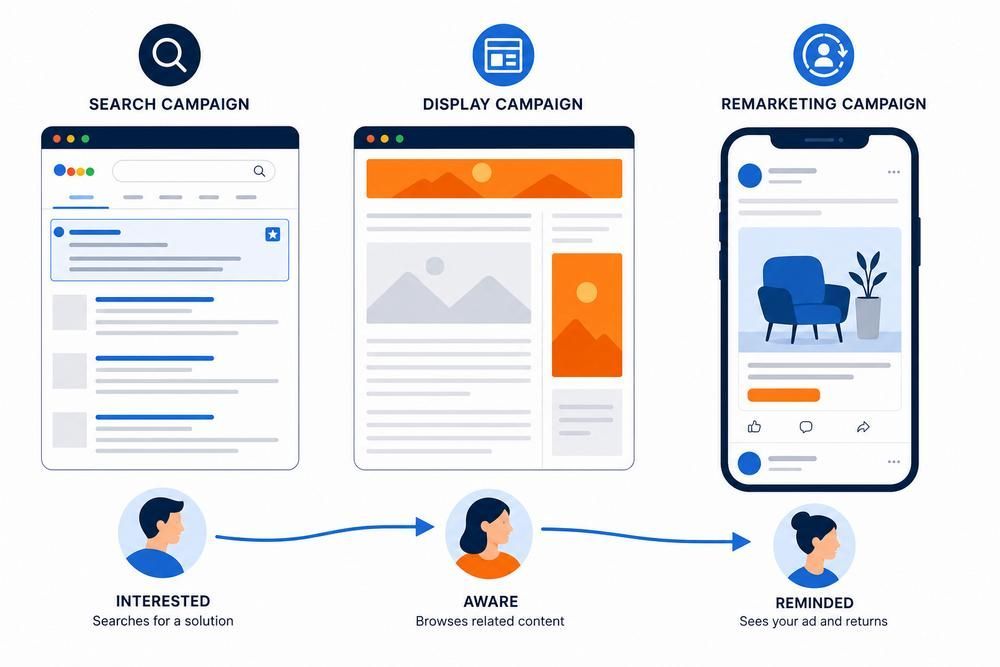
Text ads that appear when someone searches for your keywords. The highest-intent, most direct path to capturing prospects who are actively looking for what you offer.

Display Campaigns
Visual banner ads that appear across Google's network of partner websites. Effective for brand awareness and reaching prospects who've visited your site before.

Remarketing Campaigns
Ads specifically targeted to people who have already visited your website. Remarketing keeps your brand in front of warm prospects and dramatically improves overall conversion rates.

Local Campaigns
Ads optimized for driving local action — phone calls, direction requests, and store visits — from customers in your specific geographic area.
Local Google Ads — Targeting Your Specific Market
For businesses in Berks County and the Lehigh Valley, geographic targeting is one of the most powerful tools in the Google Ads toolbox. You can specify exactly which communities you want your ads to show in — down to specific ZIP codes, radius from your location, or custom-drawn service area boundaries. This means a Boyertown HVAC contractor isn't paying for clicks from Philadelphia, and an Allentown restaurant isn't showing ads to people in Lancaster.
PMI builds every Berks County and Lehigh Valley campaign with precise geographic boundaries based on your actual service area. For businesses that serve multiple communities, we often structure campaigns by geography — so performance data from Kutztown informs bidding in Kutztown, and performance from Bethlehem informs Bethlehem. Each market gets the investment it warrants, and the optimization data stays relevant to the specific competitive environment of each area.
SEO + GOOGLE ADS COMBINED
Why Google Ads and SEO Work Better Together
Here's something most businesses don't realize: Google Ads and SEO aren't alternatives — they're complements. Running both simultaneously gives you insights from your ad campaigns that directly improve your SEO strategy (and vice versa). The keywords that convert well in ads become the priority targets for organic optimization. The landing pages that perform best in paid campaigns inform the redesign of your organic pages.
PMI manages both, which means these insights are automatically shared across your strategy. Clients who use PMI for Google Ads and SEO together consistently outperform those who run either one in isolation.

Google Ads Budget — What You Should Expect to Spend
The honest answer to the budget question depends on your market, your competition, and your goals. In most Berks County and Lehigh Valley service categories, a meaningful Google Ads campaign requires a minimum monthly ad spend of $500–$1,000 to generate enough click volume to optimize against. Professional services in competitive categories (HVAC, legal, financial, healthcare) typically require $1,500–$3,000 or more to compete effectively.
PMI's management fee is separate from your ad spend — you pay Google directly for the clicks, and you pay PMI for the management, optimization, and reporting. This structure means you always have full visibility into where your money is going, and you can scale your ad spend up or down based on results and business goals without affecting the management relationship.
Before we recommend a budget, we do a competitive analysis of your specific keywords and market to estimate what realistic performance looks like at various spend levels. You'll know what to expect before you commit to anything.
LOCATION CONTEXT
Google Ads Management Across Berks County and the Lehigh Valley
Every market is different. The keywords that convert in Kutztown don't necessarily match the keywords that convert in Whitehall. The competitive bidding landscape in downtown Allentown is different from Hamburg. Our Google Ads strategy is always built around the specific geography and competitive environment of your market.

Google Ads in Berks County
Reading, Wyomissing, Boyertown, Kutztown, Hamburg, Fleetwood, Birdsboro, West Reading, and all of Berks County.

Google Ads in the Lehigh Valley
Allentown, Bethlehem, Easton, Whitehall, Emmaus, Nazareth, Center Valley, Macungie, and all of the Lehigh Valley.
Industries PMI Manages Google Ads For
Google Ads strategy varies significantly by industry — the keywords, the ad copy, the landing page design, and the conversion tracking all need to be calibrated for your specific buyer's behavior. PMI brings industry-specific Google Ads experience to every engagement:
INDUSTRY LIST






Google Ads Management From $650/Mo.
Most Berks County and Lehigh Valley campaigns run $650 to $850 a month in management, depending on ad spend. You pay your ad spend directly to Google; PMI never marks it up or bills it. One-time setup starts at $400. Leads can start within days of launch, and results typically stabilize within 30 to 90 days as we optimize.
“Al answered all questions I had. The main reason to revamp my website was to get my AdWords cost down, and it worked. Always return calls quickly and transparent in the work they do.”
— Anthony Messina, Google review
Find Out What Google Ads Could Do for Your Business
A free Google Ads consultation with PMI includes a review of your current online presence, a look at what competitors in your market are spending and targeting, and a realistic assessment of what a Google Ads campaign could produce for your specific business. You'll leave with concrete information — not a sales pitch.
AREAS WE SERVE
Where PMI Manages Google Ads
PMI manages Google Ads campaigns for businesses across Berks County and the Lehigh Valley. The competitive bidding dynamics in these markets are different — and the management approach has to match. From our offices in Reading and Allentown, every campaign is calibrated to the specific market it operates in.
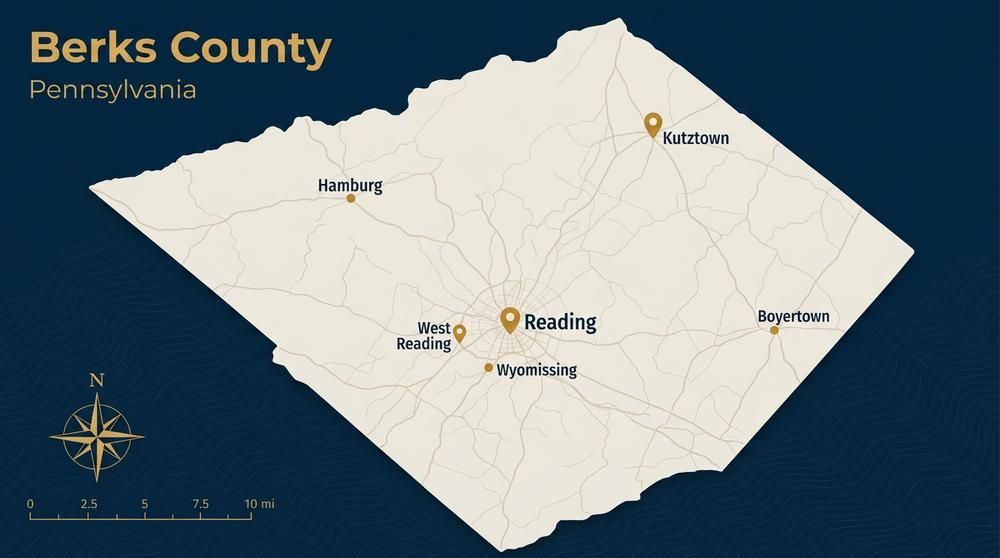
Google Ads Management in Berks County Body
Geographic targeting calibration is where most Berks County campaigns leak budget. We build campaigns that match where your actual customers come from — not the broad ZIP code defaults Google offers.
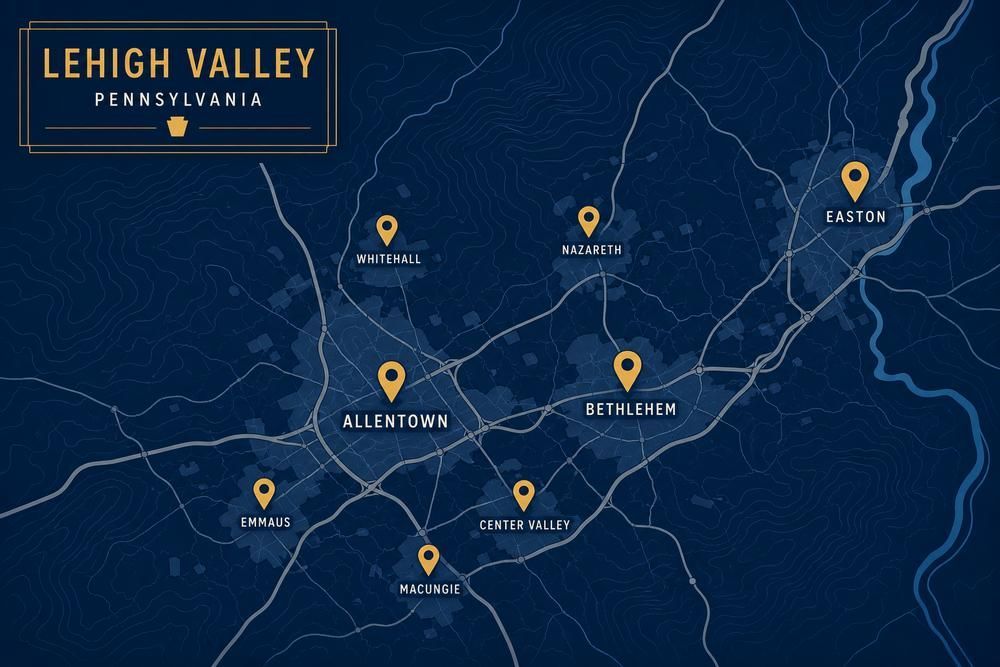
Google Ads Management in the Lehigh Valley Body
One of Pennsylvania's most competitive paid search markets, with major employers and aggressive mid-market players bidding on the same keywords. Sophisticated multi-city campaign management is the price of entry.
FREQUENTLY ASKED QUESTIONS
Frequently Asked Questions About Google Ads
How much should I budget for Google Ads as a small business?
For most small businesses in Berks County and the Lehigh Valley, a useful starting Google Ads budget is between $1,500 and $5,000 per month — and that figure covers both your ad spend (what Google charges per click) and PMI's management fee combined. Lower combined budgets struggle to produce statistically meaningful data and can take months to find what works. The right number for your business depends on your industry, your customer's lifetime value, and how competitive your keywords are. We model the math during the consultation — including the ad spend and management split — rather than guessing.
How long until Google Ads start producing leads?
Google Ads can produce leads within hours of launch — that's the appeal of the channel — but reliable, optimized lead flow usually takes thirty to ninety days. The first few weeks are data-gathering: which keywords convert, which ad copy works, which landing pages perform. Once we have that data, the campaign optimizes into a stable lead-generation engine. Some campaigns produce useful leads on day one. Others take a few weeks to find their rhythm. Either way, you'll see real performance data within the first month.
What's the difference between Google Ads and Facebook ads?
Google Ads reach people who are actively searching for what you offer — high intent, ready to buy. Facebook ads interrupt people in their feeds with what you offer — lower intent, but cheaper per click and useful for awareness. For local service businesses where someone needs a plumber, dentist, or contractor today, Google Ads almost always produces better leads. For businesses building brand awareness or selling lifestyle products, Facebook can complement Google. Most of our clients lead with Google Ads because the intent match drives better business results.
Why are my Google Ads costing so much per click?
High cost-per-click usually traces to one of three causes: bidding on overly broad keywords, weak ad copy that fails Google's quality score check, or landing pages that don't match the ad's intent. The good news is all three are fixable. Tighter keyword targeting reduces wasted spend. Better ad copy raises quality score and lowers your cost. Landing pages built around the searcher's actual intent improve both conversion and Google's relevance signals. We diagnose the specific cause before recommending fixes — there's no one-size-fits-all answer.
Should I use Google Ads if I already do SEO?
Yes — they're complementary, not competing. SEO produces organic traffic over months and years; Google Ads produces traffic immediately. Running both together means you're capturing demand from both organic searchers (who tend to have higher trust) and ad clickers (who tend to have higher intent). The data also reinforces: keywords that convert in ads inform the SEO content strategy, and high-ranking organic content reduces the ads you need to run for those terms over time. Most of our clients run both as a single integrated program.
Can I run Google Ads myself or do I need an agency?
Google Ads is genuinely difficult to run well. Google's interface tries to make it easy, but its defaults often work against you — automated bidding pushes spend toward broader matches, expanded targeting widens reach beyond intent, and the "recommendations" panel suggests changes that benefit Google more than they benefit you. Self-managed campaigns frequently bleed budget for months before the owner realizes what's happening. For most small businesses, agency management pays for itself within the first quarter through reduced waste and improved conversion rates.
What's a good conversion rate for Google Ads in my industry?
Average Google Ads conversion rates vary widely by industry — local service businesses often see 5–10%, while higher-consideration purchases like home renovations or legal services may sit at 2–5%. The benchmark that matters more than the number is the trend: a campaign that's improving month over month is healthier than one stuck at the average. We track your conversion rate against industry benchmarks and against your own prior performance, and we adjust the campaign when it's underperforming either reference.